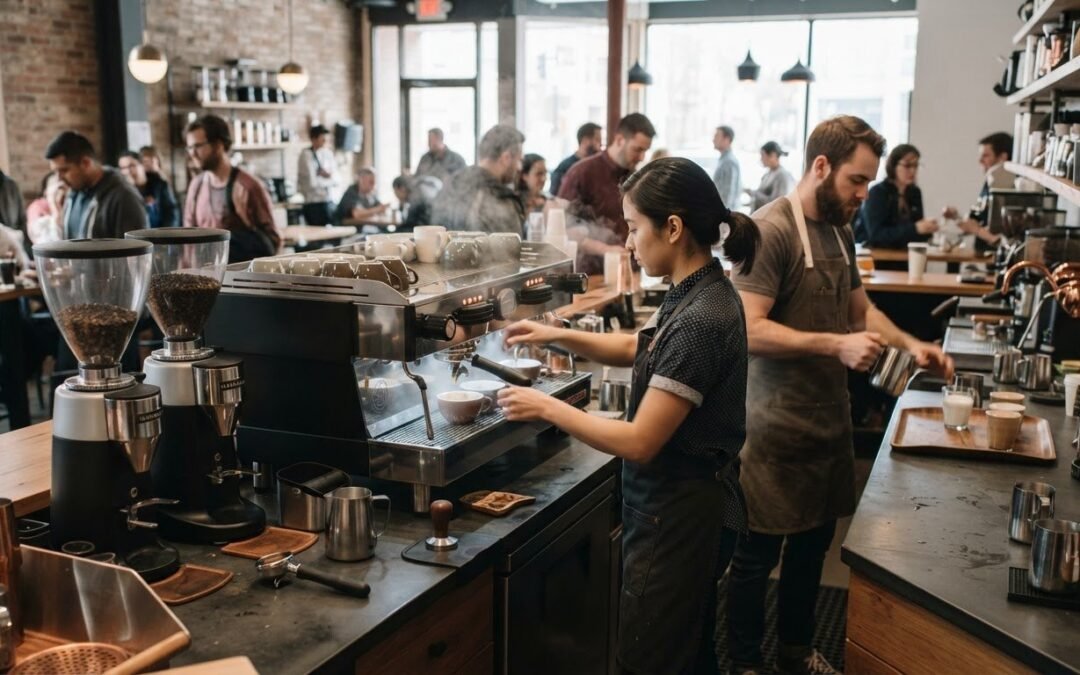
A higher group count doesn’t automatically mean a faster espresso station. During a rush, grinder speed, drink complexity, barista movement, and the machine’s capacity all shape how quickly orders reach customers. A high volume espresso machine needs to work as part of a coordinated bar, not carry the pressure of peak service alone.
It’s understandable to focus on group count when queues are building and every pause matters. But choosing capacity by that number alone can leave important workflow constraints out of the decision. This guide explains how to assess peak-period demand, compare machine and station factors that influence throughput, and narrow your search to equipment suited to your cafe’s menu and service style. It also covers how grinder capacity and bar layout fit into the picture, so your investment supports consistent service as well as the craft in every cup. 4 Girls Coffee sells commercial espresso machines, including multi-group options, alongside professional grinders.
Key Takeaways
- Assess high-volume suitability by looking beyond group count to sustained service, menu demands, and bar workflow.
- Compare group heads, boiler design, controls, and footprint against your cafe’s operating needs.
- Observe several busy periods to identify whether orders are waiting at the grinder, espresso machine, milk station, or handoff.
- Build a practical shortlist by documenting demand, pinpointing bottlenecks, and comparing exact-model specifications.
- Match machine capacity with grinder performance and station flow to support consistent service without overbuying.
What Makes an Espresso Machine High-Volume for Cafe Service?
A high-volume espresso machine is suited to a cafe’s actual pattern of work: preparing its menu reliably through busy periods, recovering between demand surges, and supporting the baristas’ workflow across repeated service windows. There is no universal drinks-per-hour label that makes a machine right for every cafe. A setup that handles a short burst may not suit a longer rush or a menu with frequent milk-based orders.
Suitability depends on more than the machine. Drink mix, order timing, staffing, grinder performance, and preparation practices all affect station output. Understanding basic espresso machine technology can help frame a comparison, but your cafe’s service pattern gives capacity decisions practical meaning.
How to describe cafe demand beyond daily drink totals
Daily totals can hide the pressure placed on a bar during its busiest window. During representative rushes, record orders in shorter intervals and separate espresso-based drinks, milk drinks, and other menu items. This helps show whether demand is concentrated in espresso preparation, steaming milk, or coordinating several steps at once.
Order timing matters, too. The same number of drinks can create different demands when orders arrive steadily rather than in clusters. Note how staffing and preparation routines affect the pace. One barista handling several tasks faces a different workflow from a team sharing drink preparation and handoff.
What “high-volume” does and does not tell a buyer
The label signals an intended operating context, but it does not establish a model’s tested throughput or guarantee a particular service pace. Machine capacity is only one part of station output. Grinding, milk preparation, barista coordination, and drink handoff all affect how quickly orders move.
For each model under consideration, compare throughput, group count and configuration, and other performance details against the manufacturer’s information for that exact model and configuration. Compact cafe equipment may suit a smaller footprint or a more measured service pattern, while a busier operation may need a different balance of capacity and workflow. The useful comparison is not simply “large” versus “small,” but whether the equipment can support your menu and demand consistently.
How Machine Design and Bar Workflow Shape Peak-Hour Throughput
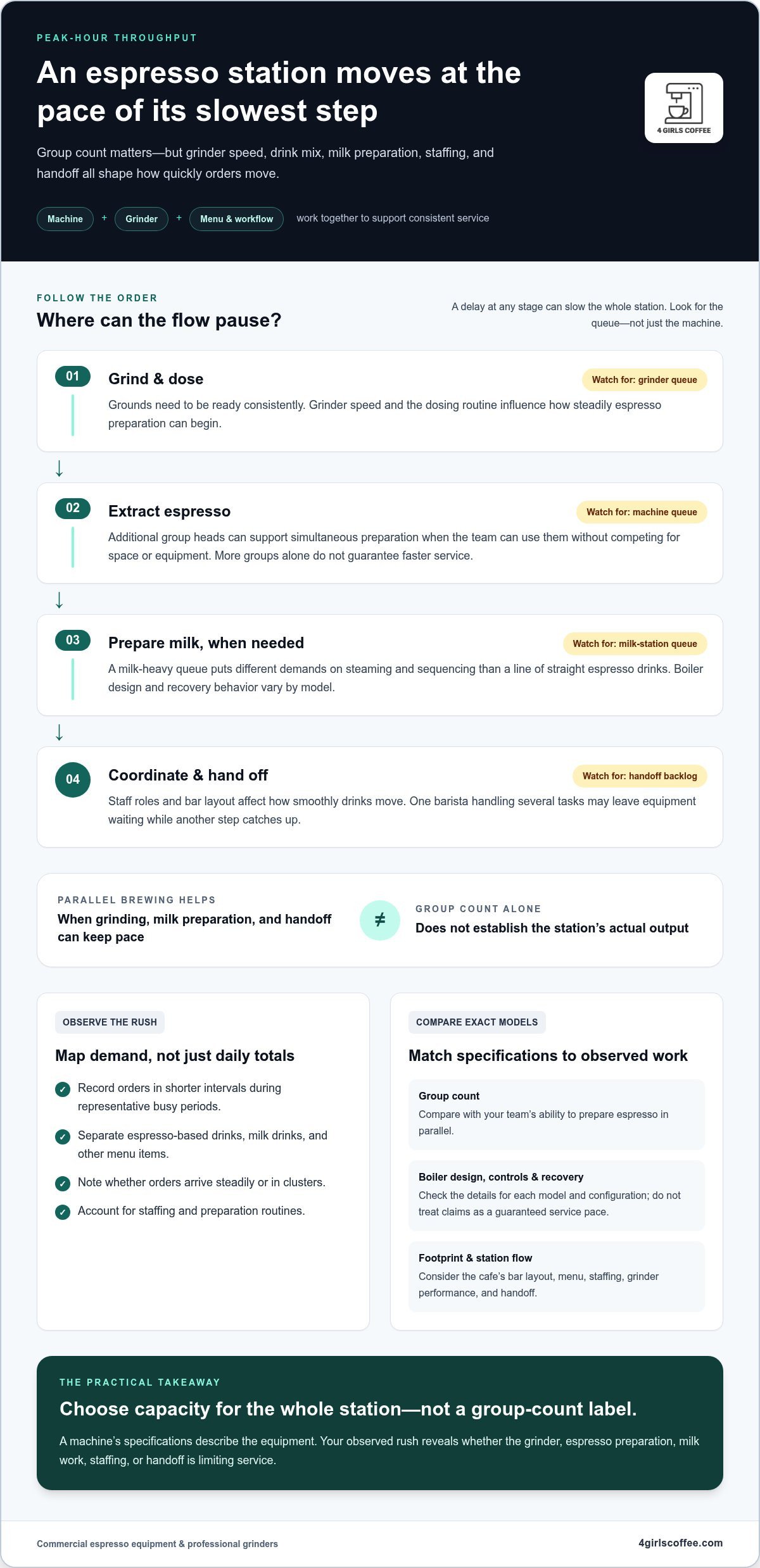
Peak-hour service depends on how the machine and the rest of the bar work together. Multiple group heads can let baristas prepare espresso at the same time, but parallel brewing only helps if grinding, milk preparation, and order handoff keep pace. A high volume espresso machine can provide room for coordinated work, but it cannot remove delays elsewhere in the station.
How group heads and boiler capacity affect service
Additional group heads can support simultaneous espresso preparation, giving a team more flexibility when several orders arrive together. The benefit depends on task assignments and whether drinks can be prepared without baristas competing for space or equipment. More groups alone do not guarantee faster service.
Boiler design and capacity also affect how a machine supports brewing and steaming during sustained work. Configurations and recovery behavior vary by model, so compare them as specific features rather than guarantees of a particular output. Manufacturer specifications describe a machine, but theoretical capacity is not the same as repeatable performance through a cafe’s rush.
Why grinders, milk preparation, and staffing matter
Each drink moves through a sequence: beans are ground and dosed, espresso is extracted, milk is prepared when needed, and the finished order is handed off. A pause at any stage can slow the whole station. Grinder speed and dosing routine matter because baristas need grounds ready consistently. Drink complexity matters, too: a milk-heavy queue places different demands on steaming and sequencing than a line of straight espresso drinks.
Staff roles shape that sequence. If one person must grind, pull shots, steam milk, and manage handoff, the machine may sit idle while another task catches up. Clear coordination lets baristas prepare drinks in parallel, while a professional grinder suited to the cafe’s routine supports a steadier rhythm and consistent espresso preparation. Research at the UC Davis Coffee Center reflects the value of examining coffee through both craft and scientific study, a useful perspective when considering how equipment and preparation practices interact.
Practical throughput depends on the machine, grinder, menu, and workflow working together, not on group count alone. Assess the whole station before deciding which capacity makes sense. 4 Girls Coffee sells commercial espresso machines and professional grinders for cafes comparing equipment for their service needs.
How to Compare High-Volume Espresso Machines Without Overbuying
A sound comparison starts with the cafe’s service pattern, not a universal ranking of machines. A high volume espresso machine should address observed demand while fitting the menu, staffing, and bar layout. More capacity can be valuable, but only when the operation can use it.
Use a comparison sheet to separate manufacturer information from your operating needs. Record specifications for each exact model and configuration. Do not assume a feature or performance figure applies across a brand’s entire range.
Which machine specifications deserve close comparison?
Review group count alongside the way the team prepares drinks. More groups can support parallel espresso preparation, but do not guarantee a particular output. Boiler design, temperature controls, and recovery claims are also model-specific, so compare them using manufacturer data rather than assumptions based on category or appearance.
Footprint matters just as much. Compare the machine’s dimensions with available counter space, barista movement, grinder placement, cleaning access, and the room needed for milk preparation and handoff. A configuration that looks capable on paper may crowd the working bar and complicate the workflow.
| Comparison factor | What to record | Why it matters |
|---|---|---|
| Group count and configuration | Manufacturer-stated arrangement for the exact model | Indicates opportunities for parallel preparation, not guaranteed throughput |
| Boiler design | Verified configuration and stated operating details | Helps frame brewing and steaming capacity for the menu |
| Controls | Documented temperature or shot-control features | Shows how the machine supports the cafe’s preparation practices |
| Footprint and access | Manufacturer dimensions and cleaning access needs | Reveals how the machine fits the bar and daily routine |
| Operating context | Your peak demand, staffing, menu, and available space | Connects specifications to actual service needs |
When does extra capacity become unnecessary?
Compare the machine’s capabilities with observed demand, typical staffing on bar, and the complexity of the drinks being prepared. If the grinder or milk station is already the constraint, adding machine capacity may not shorten the queue. It could instead take up valuable space or add features and workflow demands the team does not need.
Allow for reasonable growth that aligns with the cafe’s plans, but distinguish it from speculative demand. A strong shortlist balances current service requirements with practical room to evolve. Compare equipment by fit rather than choosing the largest configuration simply because it appears more future-proof.
How to Identify the Real Bottleneck During a Cafe Rush
A queue at the espresso bar does not always mean the machine is causing the delay. Orders may be backing up at the grinder, milk station, or handoff, and a larger machine will not solve a constraint elsewhere. Before comparing equipment, document what happens during several representative busy periods and identify where work actually waits.
A practical peak-period audit for cafe operators
Use a simple observation sheet during busy windows across different shifts. Record the order pattern, drink types, queue movement, and pauses between preparation steps. Note whether the machine stays occupied, waits for grounds or a barista, or finishes extraction while milk preparation or handoff lags behind.
- Record demand: Note incoming orders and distinguish espresso-based drinks, milk drinks, and other menu items.
- Follow the sequence: Observe when orders wait for grinding, extraction, milk preparation, or pickup.
- Note machine use: Track whether group heads are consistently in use or sit idle while another task catches up.
- Compare shifts: Repeat the observations during representative rushes before drawing conclusions from one unusual service period.
Patterns are more useful than a single snapshot. For example, if the machine has open capacity while baristas wait for doses, the grinder or dosing routine may deserve attention before machine capacity. If completed drinks collect at the counter, handoff may be the constraint.
Match the solution to the constraint
Use the audit to distinguish a genuine machine-capacity issue from other operational limits. If the machine is consistently occupied and orders wait for brewing capacity, compare equipment specifications with the observed demand. If delays begin earlier at grinding or later at milk preparation, examine those steps separately. A crowded bar, complex menu, or unclear staff roles can also slow service.
Record the constraint and the evidence behind it before settling on a solution. A high volume espresso machine may be appropriate when the machine itself limits the flow, but extra capacity alone will not correct a grinder bottleneck or inefficient station layout. Avoid assuming a specific productivity gain unless reliable, model-specific evidence supports it.
Once your observations point to a machine-capacity need, compare the documented requirements with commercial espresso machine options and professional grinders. A measured diagnosis gives you a clearer basis for choosing equipment that supports the way your cafe works.
Choose a High-Volume Espresso Machine for Your Cafe’s Next Stage
A well-matched machine shortlist begins with a clear picture of how your cafe operates, not a search for the largest available configuration. Use what you have documented about peak demand and service delays to define the capacity, features, and footprint that will support your next stage. The goal is a balanced espresso station that fits current service and reasonable growth.
Turn the cafe’s operating profile into a machine shortlist
Bring your observations together before comparing models. Summarize peak-period demand and menu mix, staffing during busy service, space and layout constraints at the bar, and growth you can reasonably plan for. Then compare commercial machine categories against those requirements, including compact options and multi-group machines. Neither category is automatically right; the fit depends on the work the station needs to handle.
Include the grinder in the shortlist. Its ability to support your dosing routine and service pace matters alongside machine capacity, and the menu influences how the two pieces of equipment will be used. Comparing them as parts of one station helps prevent a machine upgrade from simply shifting the delay to another step.
Explore commercial espresso equipment at 4 Girls Coffee
4 Girls Coffee sells commercial espresso machines and professional grinders for a range of operating needs. Its inventory includes equipment from Carimali, Fracino, Expobar, and La Marzocco, alongside compact and multi-group commercial machine categories. Your documented requirements can help determine which options best fit your service needs.
Keep your operating profile and exact-model specifications together as you narrow your selection. This makes it easier to assess whether a machine’s configuration, controls, and footprint align with your service needs, rather than choosing on group count or brand name alone.
With your priorities in hand, explore commercial espresso machines as a considered next step toward a station designed for your cafe’s service volume.
Build an Espresso Station Ready for What’s Next
The right high volume espresso machine is the one that supports your cafe’s actual service pattern, not simply the one with the most group heads. Document peak demand, identify where orders slow, and compare exact-model specifications against your menu, staffing, and available space. A reliable service rhythm also depends on the grinder and the way the full station is arranged.
With a clearer operating profile, you can narrow your options without overbuying or overlooking a real bottleneck. 4 Girls Coffee sells commercial espresso machines from brands including Carimali, Fracino, Expobar, and La Marzocco, along with professional coffee grinders to consider as part of a thoughtfully matched setup.
Explore commercial espresso machines and take the next step toward equipment that fits your cafe’s needs. A well-considered choice can help your team serve each drink with greater confidence and consistency.
Frequently Asked Questions
What is considered a high-volume espresso machine?
A high-volume espresso machine is suited to sustained cafe service that matches an operation’s demand, menu, and workflow. There is no universal drinks-per-hour threshold that works for every business. A useful assessment considers whether the machine can support repeated busy periods, how baristas prepare drinks, and whether grinding or milk preparation slows the station. Compare exact-model specifications, then judge them against observed service needs.
How many espresso drinks can a commercial machine make per hour?
There is no reliable hourly figure that applies to every commercial machine or cafe. Actual output depends on the model’s specifications, order timing, drink mix, grinder performance, staffing, and preparation routines. A burst of straight espresso orders creates different demands from clustered milk drinks. Treat manufacturer throughput figures as model-specific reference points, not guaranteed cafe output, and assess them alongside observations from representative busy periods.
Is a two-group espresso machine enough for a busy cafe?
A two-group configuration can suit a busy cafe if its capacity and workflow align with peak demand, staffing, and menu. Group count alone cannot settle the question. Review when orders arrive, how many drinks require milk, and whether baristas can work effectively in parallel. A two-group configuration may be a sound fit for one operation and a constraint for another, so compare its specifications with your service pattern.
Does a high-volume espresso machine need a commercial grinder?
A cafe serving sustained espresso demand should consider grinder capacity as part of the overall station. Grinding and dosing can become a bottleneck even when the machine has room for more work. Match the grinder to the cafe’s service pace and preparation routine, with attention to consistent dosing and the menu’s needs. 4 Girls Coffee sells professional coffee grinders alongside commercial espresso machines, supporting a considered equipment comparison.
Are more group heads always better for a busy cafe?
No. Additional group heads can create more opportunity for simultaneous espresso preparation, but they do not guarantee faster service or resolve delays at the grinder, milk station, or handoff. A larger configuration may also require more counter space and coordination. Assess how consistently the machine is occupied during rushes, then compare group count with staffing, menu complexity, and bar layout before deciding whether added capacity is useful.
How do I choose an espresso machine for peak-hour demand?
Start by recording orders and drink types during several representative busy periods, then identify where work waits: grinding, extraction, milk preparation, or handoff. Set practical constraints for staffing, counter space, and intended growth. Compare exact-model manufacturer specifications against those requirements, including configuration, controls, and footprint. This process helps you select a high volume espresso machine based on documented needs rather than a general capacity label or group count alone.
Can a larger espresso machine improve cafe service?
A larger machine can improve service if espresso capacity is the documented constraint and the team, grinder, and workflow can use the added capacity. If orders instead wait for grinding, milk preparation, or pickup, a larger machine may not address the source of the delay. Observe the full sequence during busy periods before upgrading, then compare equipment specifications with the bottleneck you identified. Avoid assuming a specific productivity gain without reliable model-specific evidence.