
A larger group count can look like the safer choice, but it won’t necessarily make service smoother. If you’re deciding how to choose a commercial espresso machine, start with the rhythm of your business: how customers order, what your menu requires, and when demand peaks. The right machine should support that daily pattern without taking more space or investment than your operation can justify.
Group counts, boiler designs, controls, and feature lists can make comparisons feel complicated. This checklist turns those details into a practical shortlist based on service volume, workflow, menu, available space, and site requirements. It explains how to weigh capacity against your real service needs, which specifications to compare, and why a dedicated commercial grinder belongs in your equipment plan. From compact one-group formats to larger multi-group options for high-volume service, the goal is to balance service needs, an efficient bar, and value for your operation.
Key Takeaways
- Estimate drink demand for ordinary service and peak rushes separately to identify the capacity your operation needs.
- Compare group count, boiler configuration, controls, and intended use together; no single specification tells the whole story.
- Map counter space, barista movement, grinder placement, milk preparation, and order handoff before narrowing your options.
- Use a four-step scorecard to separate essential requirements from preferences and make trade-offs visible.
- Learn how to choose a commercial espresso machine by building a shortlist around your menu, workflow, footprint, and site requirements.
Start with the café service pattern before choosing a commercial espresso machine
Your expected service, not a machine’s headline specification, should shape your shortlist. Before comparing group counts or controls, describe the work the machine must handle: the number of espresso drinks you expect, when orders arrive, and how the menu affects preparation. Starting with these details helps you understand how to choose a commercial espresso machine without sizing around a specification that doesn’t fit your café.
Separate an ordinary service period from a peak rush. Use receipts or order records from an existing café where available, or realistic opening forecasts if you’re planning a new one. For each period, note total orders and estimate how many involve espresso, steamed milk, or both. A rush of mostly brewed coffee creates different demands from one with frequent milk-drink orders.
How to estimate café espresso demand without guessing
Build a demand snapshot from receipts, order tickets, or a forecast based on your expected hours and service style. For each period, record total orders, espresso drinks, milk-based drinks, and menu items that require multiple espresso extractions. If you don’t have operating data yet, label the figures as estimates and write down the assumptions behind them.
Keep ordinary demand and peak demand distinct. An occasional event or unusually busy day can inform planning, but it shouldn’t automatically determine the size of your everyday setup. Consider plausible growth tied to a planned change, such as longer opening hours or a revised menu, and distinguish it from uncertain future demand. Forecasts are planning tools, not guarantees.
What the menu reveals about your machine requirements
Drink totals are only part of the picture. Review the steps behind popular orders: repeated espresso extraction, milk steaming, and the sequence in which staff prepare drinks. A menu with frequent milk-based orders may put more pressure on the steaming workflow than one with a similar number of espresso-forward drinks. A broad menu can also add preparation steps that affect service pace.
Account for seasonal offerings and ordering patterns. A limited-time milk drink may shift preparation priorities during part of the year, while table service or a concentrated takeaway rush can change how orders reach the bar. The history of the espresso machine offers context on how the technology has evolved, but your shortlist should reflect the café you intend to operate. Write down your core drinks, their preparation needs, and when orders are most concentrated. Those details will make the next specification comparison more useful.
Compare commercial espresso machine specifications that affect daily service
Once your service pattern and menu are clear, compare specifications by the work they support, not by how impressive they look on a product page. Group count, boiler configuration, and controls influence one another, while staffing, order flow, and counter space determine how useful each feature will be. No single specification guarantees that a machine will suit your café.
| Specification | What to compare | Why it matters in service |
|---|---|---|
| Group count | Number of groups and the space the machine occupies | Relates to simultaneous extraction and bar layout, but not output by itself. |
| Boiler configuration | How brewing water and steam are supplied | Consider the balance of espresso extraction and milk preparation on your menu. |
| Controls | Manual operation, programmable settings, or a combination | May affect repeatability, training, and how baristas divide tasks. |
| Intended operating context | Manufacturer’s stated use and specifications | Helps you assess whether the machine aligns with your expected workload and site. |
How group count relates to parallel café workflow
Group count indicates how many brewing points a machine provides. Multiple groups can support parallel preparation when orders arrive together, but they don’t guarantee a particular capacity. Staffing, grinder access, milk steaming, and order handoff all affect pace. A larger configuration also needs suitable counter space and a workflow that can use it. For a closer look at the trade-offs, consult a dedicated one-group versus two-group espresso machine comparison.
Which boiler and control features deserve closer comparison
Boiler configuration describes how a machine manages water for brewing and steam. Compare it with your menu: frequent milk preparation may make steam capability a priority, while espresso-focused service places different emphasis on extraction. Manual controls give the operator direct input. Programmable controls may help standardize repeat tasks, depending on the model and staff workflow. Confirm capacity, power requirements, and operating claims in current manufacturer documentation.
Evaluate combinations rather than isolated features. A machine with more groups may not improve service if the bar is cramped or there aren’t enough staff to use them. Advanced controls won’t resolve a mismatch between the machine’s requirements and your site, either. As you learn how to choose a commercial espresso machine, compare compact one-group formats and larger multi-group options against your service profile, menu, staffing, and available space. You can explore commercial espresso machine formats as part of that comparison.
Check how a commercial espresso machine fits the bar, grinder, and utilities
A machine can suit your menu on paper and still disrupt service if it crowds the bar or interrupts the team’s movement. Before narrowing your choices, map the espresso station as a working area. Measure the counter, note access routes, and allow for the tasks that happen around the machine. These checks help you choose a commercial espresso machine that fits both your café and its daily workflow.
Plan machine placement around real barista movement
Trace a typical order from grinding and dosing through extraction, milk steaming, cup placement, and handoff. Mark where each task happens, then consider whether two staff members can work without repeatedly crossing paths during a rush. Allow space for cups, milk, and finished drinks instead of measuring only the machine’s footprint.
Measure the counter’s usable width and depth, along with the route the machine must travel to reach its position. Compare those measurements with the manufacturer’s current machine dimensions and any stated clearance requirements. A compact one-group format may suit a restricted counter, while a larger multi-group machine needs space for its intended workflow. Neither is automatically better. The right fit depends on your space, staffing, and order flow.
Coordinate the espresso machine with the grinder and site
The grinder is part of the espresso station, not an accessory to place wherever space remains. Position it so the barista can dose and prepare coffee without blocking extraction, steaming, or handoff. Plan where coffee supplies will be stored and replenished, too, so those movements don’t interrupt the main work area.
Before purchase, create a site checklist using the manufacturer’s documentation for the specific machine and grinder. Record the stated electrical supply, water connection, drainage, and ventilation requirements where applicable. Don’t assume that models in the same category share the same requirements.
- Measure the counter and access route to the intended position.
- Mark the machine, grinder, cup area, milk-preparation space, and order handoff.
- Record model-specific utility and clearance requirements from current manufacturer documentation.
This step connects equipment selection to the site instead of treating site preparation as an afterthought. Keep your notes with the shortlist so each candidate is assessed against the same bar layout and documented requirements. A well-planned station gives the team room to work carefully and consistently, even when orders gather at the counter.
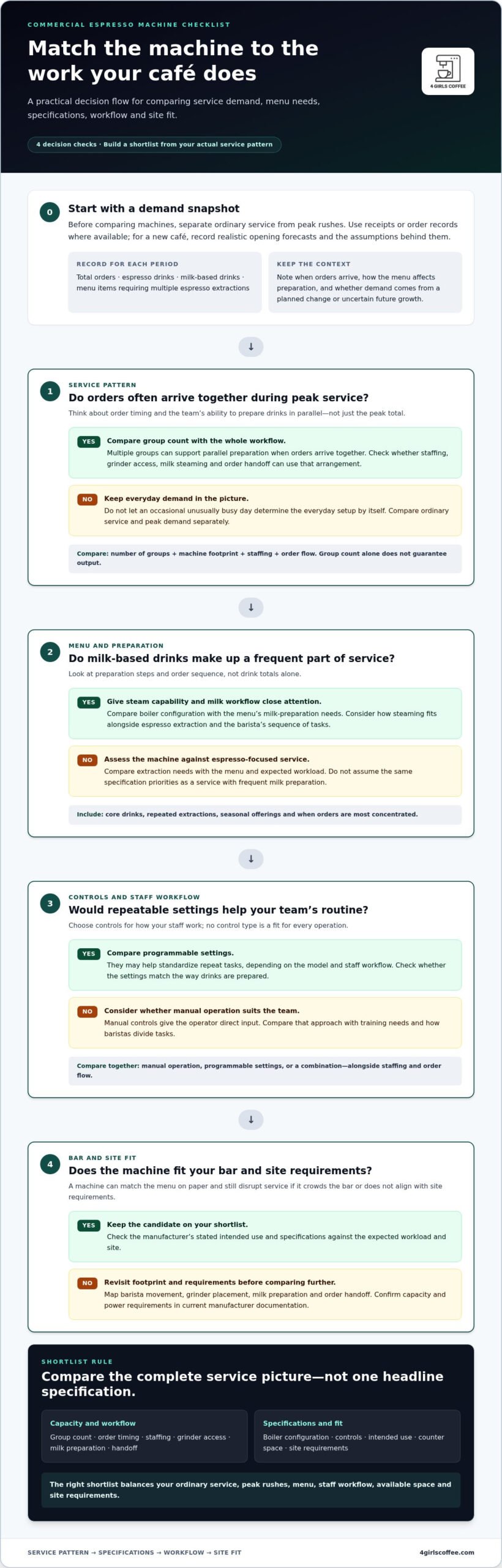
Use a commercial espresso machine scorecard to balance competing priorities
A scorecard turns a crowded set of specifications into a clear decision. It keeps the comparison anchored to your service needs, staff workflow, and site limits, so a higher specification doesn’t automatically seem like the better operational fit. As you work through how to choose a commercial espresso machine, separate requirements that determine suitability from preferences that simply make one option more appealing.
How to rank machine requirements before comparing models
Assign each criterion a priority based on your café’s service pattern and documented site requirements. Treat a failed essential as a reason to remove a candidate from the shortlist, not as a weakness to offset with attractive extras. Keep preferences separate, and revisit their ranking only after the machines meet your operating needs.
- Define needs: Record service fit, menu demands, workflow, staff familiarity, footprint, and verified technical requirements.
- Rank priorities: Mark each item as essential, important, or preferred. Essentials might include fitting the measured counter or meeting the site’s documented utility requirements.
- Compare suitable configurations: Assess only machines that meet every essential, then compare relevant specifications and controls.
- Document trade-offs: Note what each candidate supports, what it asks of the workflow, and which preferences you would set aside.
How to compare trade-offs without relying on headline claims
Use the scorecard to compare like with like. For each model, record the current manufacturer-documented specification beside the need it addresses. A control feature, for example, belongs in the comparison because it supports a specific consistency or training requirement, not just because it sounds advanced. Verify model-specific capacity, power, dimensions, and operating claims instead of assuming one machine’s details apply to another.
Then assess the compromises in context. A larger configuration may offer more brewing points, but could demand more counter space or a different staffing pattern. A preferred finish or interface style may be welcome, but it shouldn’t outweigh a shortfall in workflow fit or site requirements. This makes the comparison more objective and keeps promotional language from replacing evidence.
Once your essentials and priorities are clear, you can explore commercial espresso machines at 4 Girls Coffee and assess suitable formats against the same scorecard. Keep only candidates that meet the non-negotiables, then use your documented trade-offs to identify the most considered fit for your café.
Turn your commercial espresso machine checklist into a confident shortlist
A useful shortlist is concise because each candidate has already met your essential criteria. Bring together your service profile, menu needs, machine configuration, preferred workflow, available footprint, and verified site requirements. This gives you a consistent basis for comparing options and helps prevent attractive features from distracting you from practical fit.
Which confirmed machine formats can illustrate a shortlist
Catalog examples can help you picture different formats, but they aren’t recommendations on their own. The Carimali Bubble Coffee Machine and Expobar Ruggero 2.0 Coffee Machine are examples to compare with your requirements. For a compact one-group format, consider the 1 Group EX3 High Group Compact Coffee Machine as another catalog example. Compare each option using current product details rather than assuming specifications from its name or category.
Keep only machines that meet every essential requirement, including your menu needs and bar layout. A model that doesn’t fit the footprint or documented site requirements shouldn’t remain on the shortlist simply because it offers preferred controls or a distinctive finish.
What to record before making a final equipment decision
Before settling on a candidate, prepare a brief that captures the decisions behind your shortlist:
- Service: Expected orders during ordinary and peak periods, with espresso and milk-drink demand noted.
- Menu and workflow: Core drinks, preparation steps, staff movement, and preferred order handoff.
- Space and configuration: Available counter area, access route, machine format, and grinder placement.
- Site requirements: Relevant electrical, water, drainage, clearance, and other requirements stated in current manufacturer documentation.
List any remaining specification questions beside the candidate they relate to, such as dimensions, power requirements, or stated operating context. Keep unanswered details distinct from confirmed facts, and don’t treat a feature or performance claim as established until it appears in current manufacturer information. This final review turns the question of how to choose a commercial espresso machine into a disciplined comparison grounded in your café’s needs.
With your requirements defined, browse espresso machines and coffee equipment to explore options for your shortlist.
Make your shortlist the foundation for a better café workflow
A considered shortlist starts with how your café serves customers, then tests each machine against menu demands, barista workflow, available space, and verified site requirements. Group count, boiler design, and controls matter most when they answer a specific operational need. A higher specification alone doesn’t guarantee a better fit.
Keep your essential criteria visible as you compare options, and set aside candidates that don’t meet them. 4 Girls Coffee’s commercial selection includes Carimali, Expobar, and Fracino models, with compact one-group and larger multi-group formats to explore as you refine your choices.
With your café’s needs defined, explore commercial espresso machines at 4 Girls Coffee. A clear service profile and practical priorities will help you choose equipment that supports your team’s workflow.
Frequently Asked Questions
How do I choose a commercial espresso machine for a small café?
Match the machine to your café’s expected service, menu, workflow, and available space. Record ordinary and peak drink demand, including how many orders require espresso or steamed milk, then compare suitable configurations with your counter layout and documented site requirements. The question of how to choose a commercial espresso machine is best answered by those practical needs, not by selecting the largest machine or the longest feature list.
How many groups should a commercial espresso machine have?
Choose a group count that suits your order flow, staffing, and bar layout. More groups can support simultaneous preparation, but they don’t guarantee a particular output or faster service. A compact one-group format may fit a smaller workspace, while a multi-group machine may suit a different service pattern. Compare current manufacturer specifications, then consider whether your team and workflow can make practical use of the configuration.
What should I look for in a commercial espresso machine?
Look for a strong match with your service profile, menu, staff workflow, counter footprint, and site requirements. Compare group count, boiler configuration, and controls in relation to those needs rather than treating any feature as a performance guarantee. Check current manufacturer documentation for dimensions, power, water, drainage, and operating details. Plan for a dedicated commercial grinder, too, since grinding and extraction work together in the espresso station.
Is a commercial espresso machine suitable for a small café?
Yes, a commercial espresso machine can suit a small café if its configuration fits the workload and space. Start with realistic drink demand, peak periods, and menu preparation needs, then measure the counter and working area. Compact one-group commercial formats are one option to consider, but suitability depends on the specific machine and site. Review manufacturer documentation before narrowing your shortlist.
Can one commercial espresso machine handle a busy café?
It can, depending on the café’s order volume, menu, machine configuration, staffing, and supporting workflow. Group count alone can’t determine whether a setup will keep pace. Grinding, milk preparation, cup placement, and handoff also shape service. Estimate demand during the busiest periods and compare it with current manufacturer information for each candidate. Include the grinder and available barista workspace in your assessment.
What is more important: group count or boiler configuration?
Neither is universally more important; each addresses a different part of the work. Group count relates to the number of brewing points available for parallel preparation, while boiler configuration relates to how the machine manages brewing water and steam. Prioritize according to your menu, service pattern, and workflow, then compare both features together. Verify model-specific details in current manufacturer documentation rather than assuming all machines behave alike.